October 21, 2026
Coated vs. Uncoated French Fries: What Is the Difference?
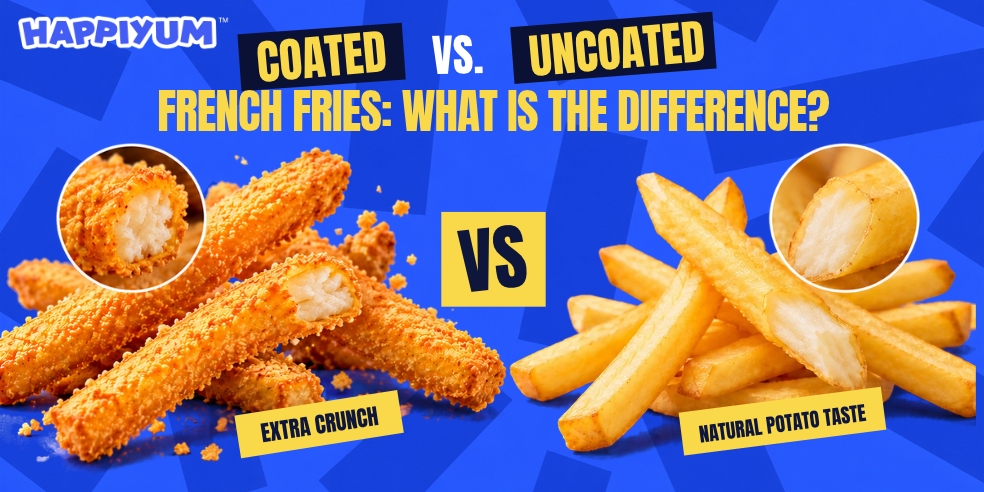 French fries might be the same end product on the plate, but the procedure used to prepare them before freezing influences the texture, crispness and holding ability. Another distinction is whether or not the fries are coated with another substance.
When ordering French fries for restaurants, QSRs, foodservice operators, distributors, and importers, it is important to know the difference between coated and uncoated fries to choose the right product for their needs. In this blog, let’s understand the difference between both.
What Are Uncoated French Fries?
Uncoated French fries are fries without a further batter or starch coating. The texture and flavor are mostly from the potato and its cooking, resulting in a more traditional potato taste. Uncoated fries are popular in restaurants, quick-service restaurants and other foodservice operations. They can work well if fries are cooked and served within a relatively short period of time (consumption is between 5 to 10 minutes) and when presentation and when traditional potato shape and instant serving is desired. The final texture is dependent on the potato variety, cut size, processing method, and cooking conditions because of the lack of an added coating layer.What Are Coated French Fries?
Coated French fries are those that are covered with an extra-thin layer placed on the potato surface prior to freezing. The layer is very invisible. Ingredients for the coating may include starches, flours, rice-based ingredients or other ingredients depending on the formulation. The coating should affect the surface characteristics of the fry. It is one of the main uses to keep the fries crisp for a longer duration after cooking. Coated fries are especially best for foodservice applications where there is a delay between cooking and eating. They stay crunchy. Coated fries also hold the flavor in a better way.Coated vs Uncoated French Fries: What Is the Main Difference?
The most noticeable difference is generally crispiness and holding performance. While frying, the water from the inside of the potato moves towards the outside. This can slowly influence the crispness of the surface of the fry, especially if the fry is stored for a longer time without coating. A coating may provide an extra surface layer and contribute to moisture control which leads to a crisper exterior for longer periods of time under proper cooking and holding conditions. Hence, this is one of the reasons why coated French fries are often thought of to be served in takeaway, delivery, buffet or high volume foodservice operations. But not all the frying types have been found to be better because of the coating. This will depend on how the product will be prepared and served.Fries for Delivery and Takeaway
There's a different need when you're delivering than when you're offering to dine in. After cooking, fries may need to be packed, transported and then consumed several minutes later. The texture of the fries may be affected by steam and moisture during this time period. Correctly formulated coating can contribute to the surface crispness during this holding period. It's one of the reasons coated fries are widely used in QSRs and delivery restaurants for French fries. This can also add flexibility between cooking and serving in restaurants with a high volume of takeout. In addition, uncoated fries are still a best option for foodservice due to many applications that call for the classic French fry.Coated vs Uncoated: Which One Should Buyers Choose?
There's no one right or wrong answer as to which type is better. Where longer lasting crispiness and crisp holding are required, coated French fries may be appropriate. They can be in use for delivery, takeaway, buffet service and high-volume QSRs business. Uncoated French fries could be acceptable if a traditional potato shape and instant serving is desired. Other considerations should be made before choosing a product, such as cut size, product specifications, packaging, cooking performance, consistency and supply capability, for importers and foodservice distributors.Happiyum offers Frozen French Fries for Foodservice and International Markets
Happiyum provides coated and straight-cut frozen French Fries ranging from 6 mm to 13 mm, meeting both foodservice demands and tastes. Our coated fries are designed for use where crispness and holding time are a factor while our straight-cut range offers the traditional straight-cut fry without coating. Happiyum is the frozen potato products manufacturer in India who provides frozen potato products to foodservice, QSRs, distributors and international buyers. There are a variety of fry formats and sizes to choose from, allowing customers to choose the best product for their menu and target market, and the service they need. In the end, coated or uncoated fries is a matter of personal preference and does not have to be a race for one winner. It's a matter of determining which product offers the perfect texture, crispness, holding power, and eating quality depending on the presentation.RELATED BLOGS

Potato Harvest in Europe 2026: What Lower Production Means for Frozen Fries Buyers
In 2026, the harvest of potatoes in Europe is predicted to be much less than 2025. Potato production in several important growing areas has been impacted by lower planted acreage, reduced yields, and summer weather conditions. The 2026 European crop will therefore be an important one to watch for buyers and businesses dealing in frozen […]
Potato Flakes Import Guide for Malaysian Importers
Malaysia has a growing food-processing and foodservice industry, creating demand for convenient potato ingredients. While frozen French fries are widely used by restaurants, QSRs, hotels, and foodservice operators, Potato Flakes in Malaysia serve a different purpose. The food industry, bakery, and snack makers primarily use them as a dehydrated potato product. Finding the best price […]
Guide to Import Potato Starch from India
Importing potato starch from India involves more than finding a supplier and comparing prices. International buyers need to confirm the potato starch grade, customs classification, food‑safety requirements, quality specifications, documentation and total landed cost before placing a bulk order. To solve this problem, here is a practical guide covering the things an importer should check. […]