November 17, 2026
How can global buyers evaluate frozen french fries quality?
 Many importers have generally face this. The sample looked fine, the price was good, and then the first container arrived. Some fries were dark at the ends, some were short and broken, and a few customers complained they were oily. By then the money is already paid.
That is why it makes sense to test frozen french fries quality before placing a full order. It does not take a lab. Most of the checks can be done in a normal kitchen with a fryer, a tray and a ruler. Below is the method we suggest, based on the standards that the fry trade uses in most countries.
It starts with the potato
The quality of fries depends a lot on the potato they are made from. The first thing to ask about is dry matter in potatoes. This is the solid part of the potato, everything except water. Most processors look for 20 to 23% dry matter. If it is lower, the fries take in more oil and turn soft. If it is much higher, they can become dry inside. Sugar is the second point. When a potato has high reducing sugar, the fries brown too fast and the tips turn dark. In Gujarat, farmers grow Santana potato and manufacturers use this to get the best fries. When you speak to a supplier, ask which variety they use, and whether they test dry matter and sugar for each lot. A serious supplier will not mind this question.Check the colour after frying
Put a handful into the same fryer and oil your kitchen uses, for the same time. Then hold them up against the USDA fry colour chart. It starts at 000, which is almost white, and goes to 4, a deep brown. Buyers mostly want their fries to land at 1 or 2. Don’t just pick out the nicest looking ones to judge. Spread the whole lot out. If some are golden and others are still pale or already too dark, it usually means the potatoes going into the line were not well sorted. A colour meter gives you an exact number if you want one, but honestly, a careful look in good light tells you most of what you need.Measure the length
Nobody likes a plate full of stubby little pieces. Length is one of the things USDA uses to sort fries. If a pack is sold as extra long, 80 out of every 100 pieces need to be over 2 inches, and 30 of them over 3 inches. A long pack needs 70 out of 100 over 2 inches. We usually just tip a bag out on the table and start sorting. Within a few minutes you can see how much of it is proper length and how much is broken bits and thin slivers, which the restaurant will end up throwing away. While you are at it, measure a few pieces across. An order for 9mm fries should not have a mix of 7mm and 11mm in it, since the thin ones burn before the thick ones are done.Look for defects
Spread a sample on a white tray. Check for black spots, bruises, green edges, pieces of peel and fries that are hollow in the middle. In a good batch, visible defects are generally not there much.Check the oil
Fries absorb oil two times. First at the factory during par-frying, and again in the kitchen. The oil content in french fries is normally 4 to 8% after par-frying and should be below about 12% after final frying. Potatoes with good dry matter absorb less oil. For a french fries supplier for HORECA, hold time is also important. After frying, keep some fries in a takeaway box and taste them after 5, 10 and 15 minutes. Good fries will still be crisp. Coated fries usually stay crisp longer, so they are a good option for delivery.Check the cold chain
Frozen fries should stay at -18°C or below from the factory until they reach your store. When the carton is opened, there should be no ice crystals, no frost inside the bag and no lumps of fries stuck together. These signs mean the product thawed and was frozen again during transport. Ask the supplier about shelf life and storage temperature, and how they will load the container. Our fries have a shelf life of 18 months at -18°C.Ask for documents
For export quality french fries, ask for lab reports and certificates. The common ones are BRCGS, ISO 22000, HACCP and FSSAI, and Halal for markets that need it.Compare more than one sample
A sample sent by courier is sometimes made with extra care. So it is a good idea to compare it with a second sample from normal production, or with the first cartons of your first order. If both are the same, the supplier is consistent.About Happiyum
Happiyum is a frozen french fries manufacturer in India. Our plant is on 10 acres in Mehsana, Gujarat, and it is fully automated with Kiremko lines from the Netherlands. We buy potatoes through contract farming in Gujarat, so we know the source of every batch. Our range has straight cut fries from 6mm to 13mm, crinkle cut fries and coated fries. As a french fries exporter India based, we supply bulk frozen french fries for export orders. If you want to try our fries, send us the cut size, quantity and destination port. Ask us for a sample and our specification sheet, and do all these checks yourself.RELATED BLOGS
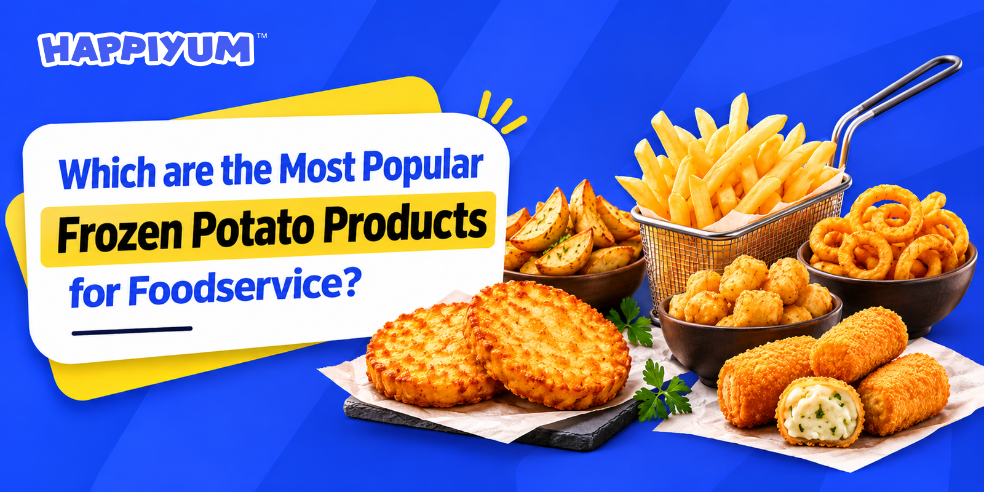
Which are the most popular frozen potato products for foodservice?
Open the freezer in any restaurant kitchen and you’ll find frozen potato products. Bags of fries, a box of hash browns, maybe some wedges at the back. There’s a good reason for that. They cook in minutes, they don’t go bad in a week, and almost nobody sends them back. Foodservice is the biggest buyer […]
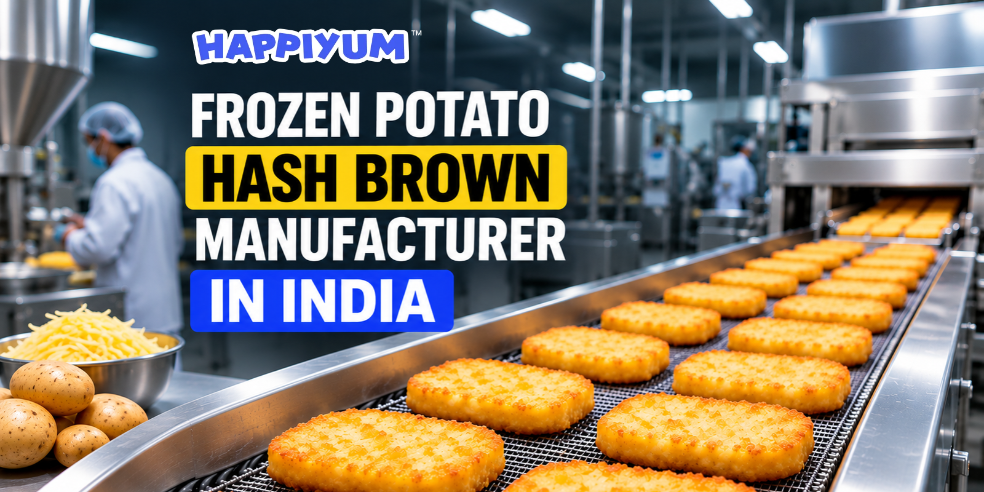
Frozen Potato Hash Brown Manufacturer in India
A hash brown gets judged in one bite(you know this). Crisp and golden outside, soft inside, and then nobody says anything. Limp or oily, and they do say. Now multiply that by fifty QSR outlets serving breakfast on the same morning, and you see why chains are so careful about who they buy from. Most […]
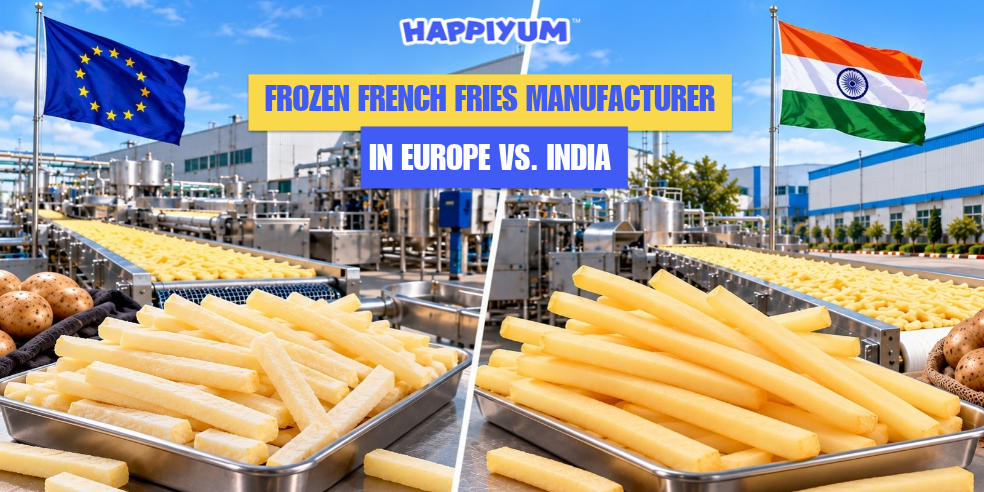
Frozen French Fries Manufacturer in Europe Vs. India
Ask an importer where to buy frozen fries, and for years the answer was Europe. That is slowly changing. A lot of buyers now also check with a frozen french fries manufacturer in India before placing their orders. Europe started it. India is taking it forward. Fries have a long European story. Belgium and France […]